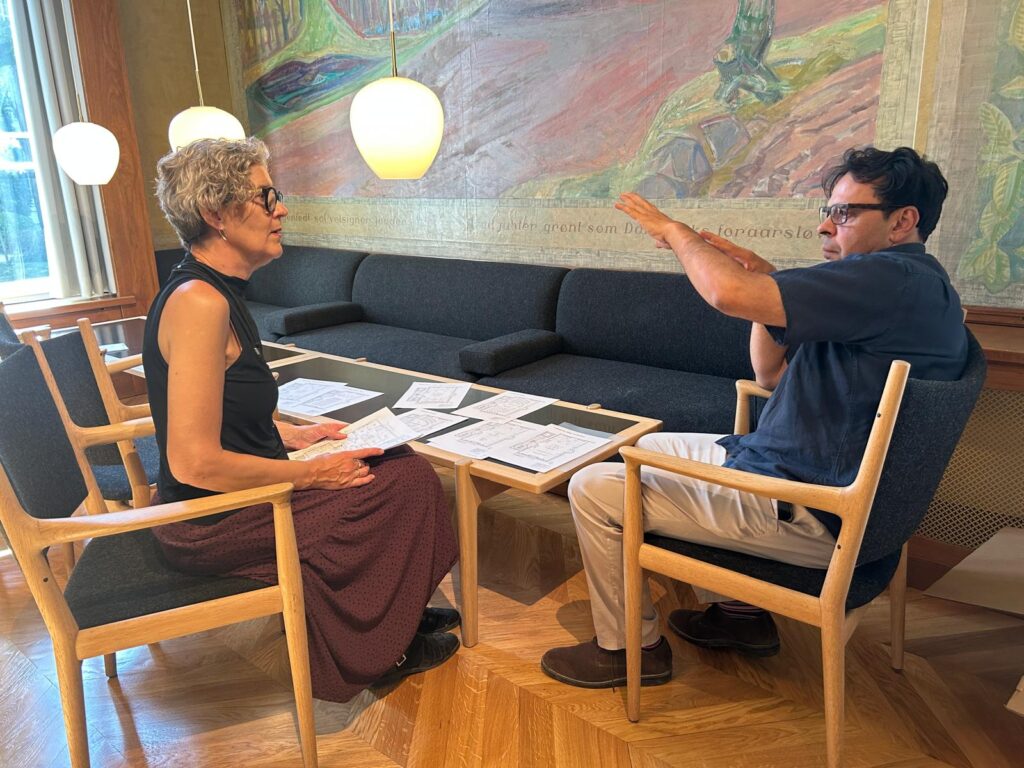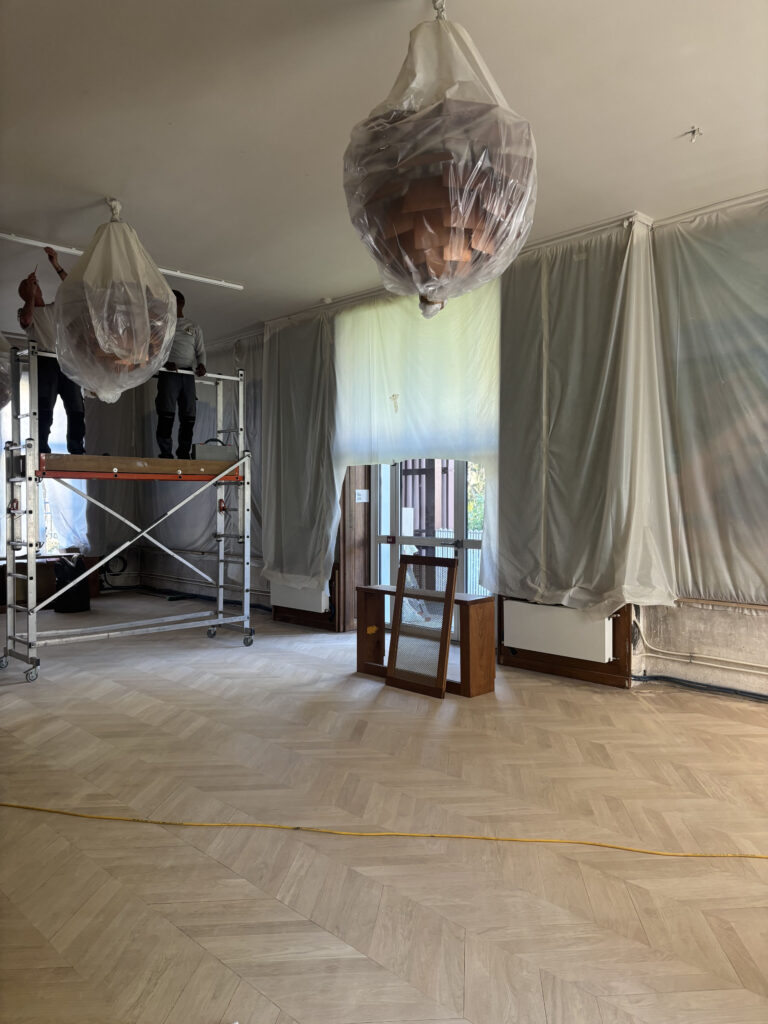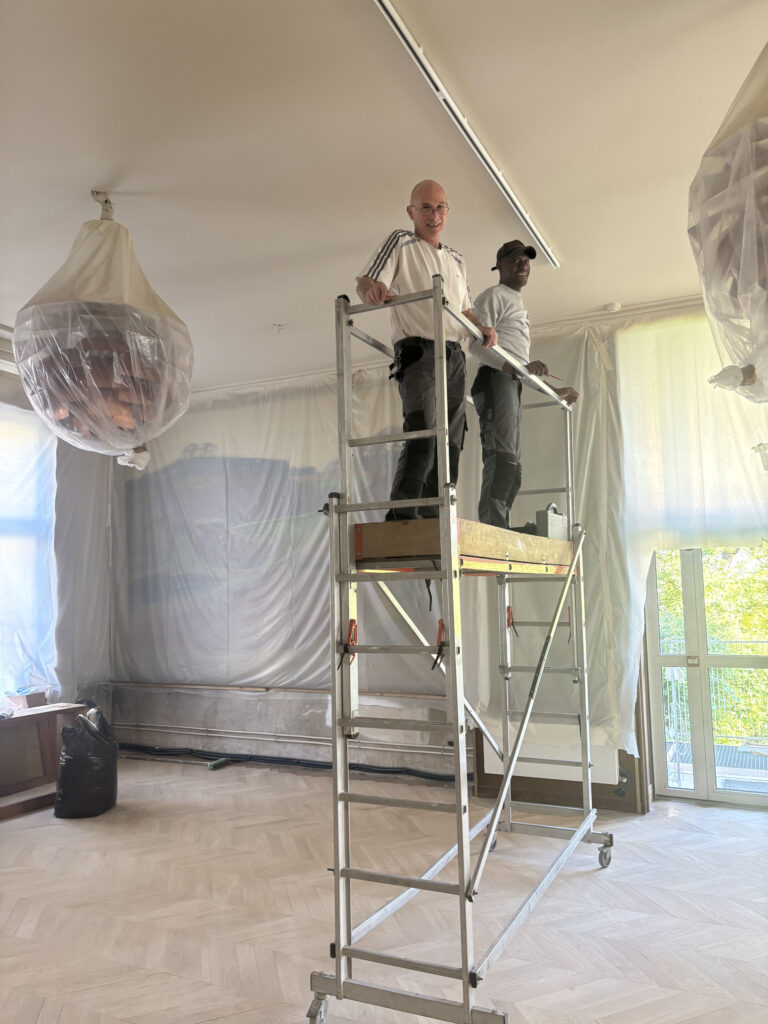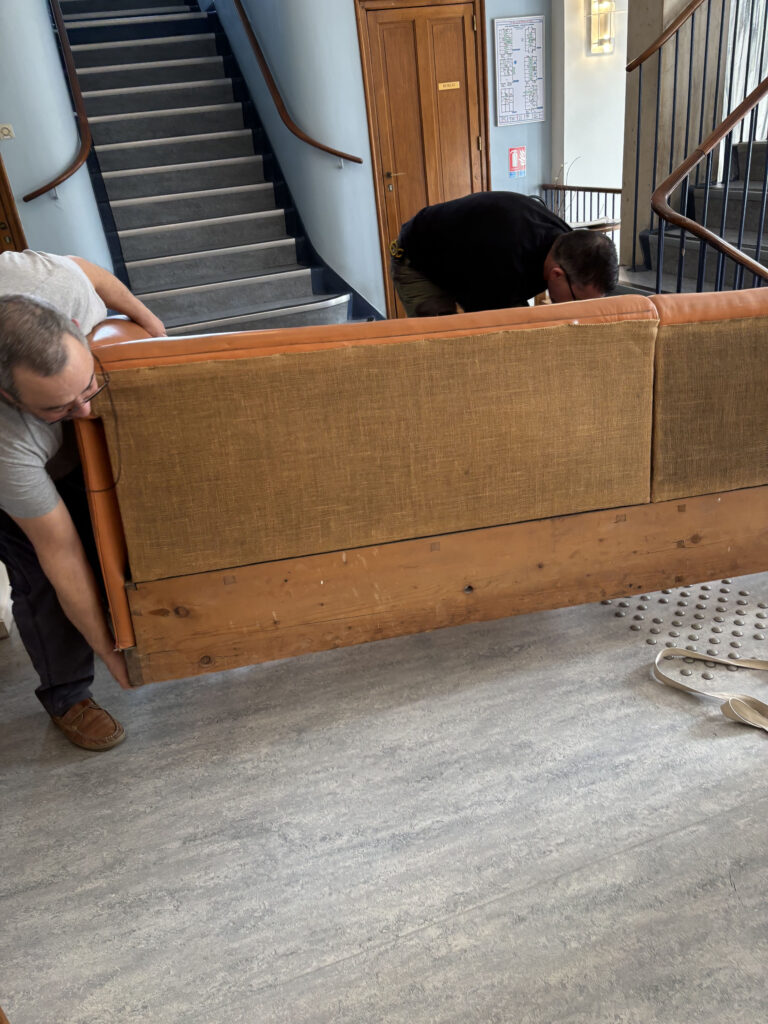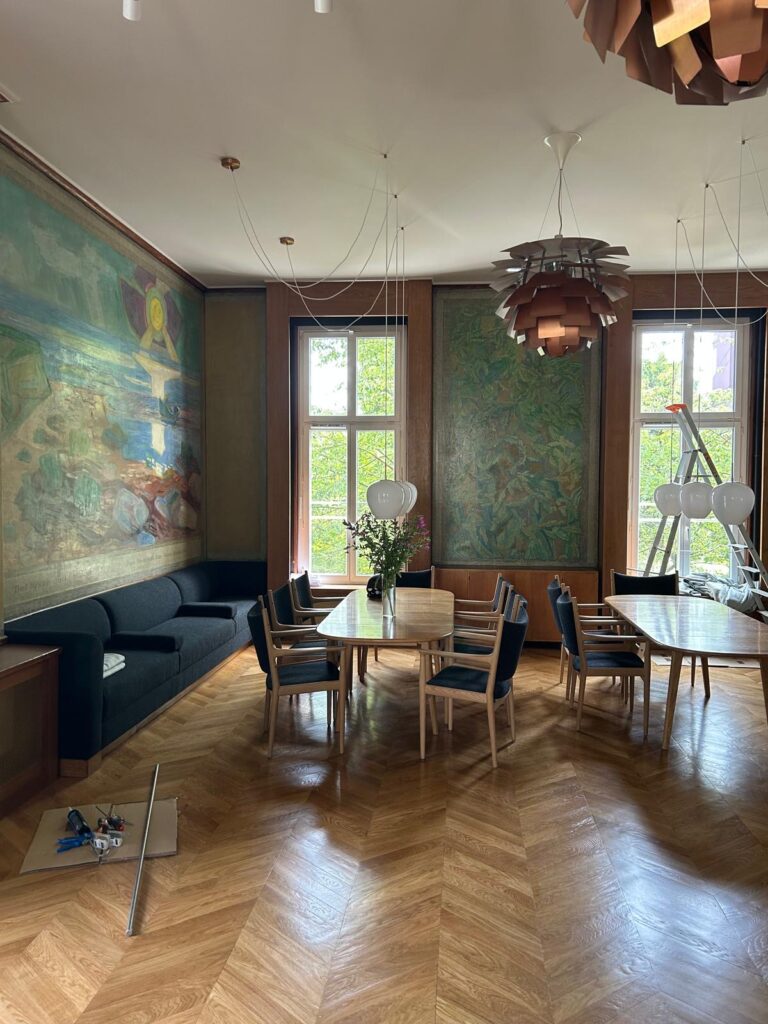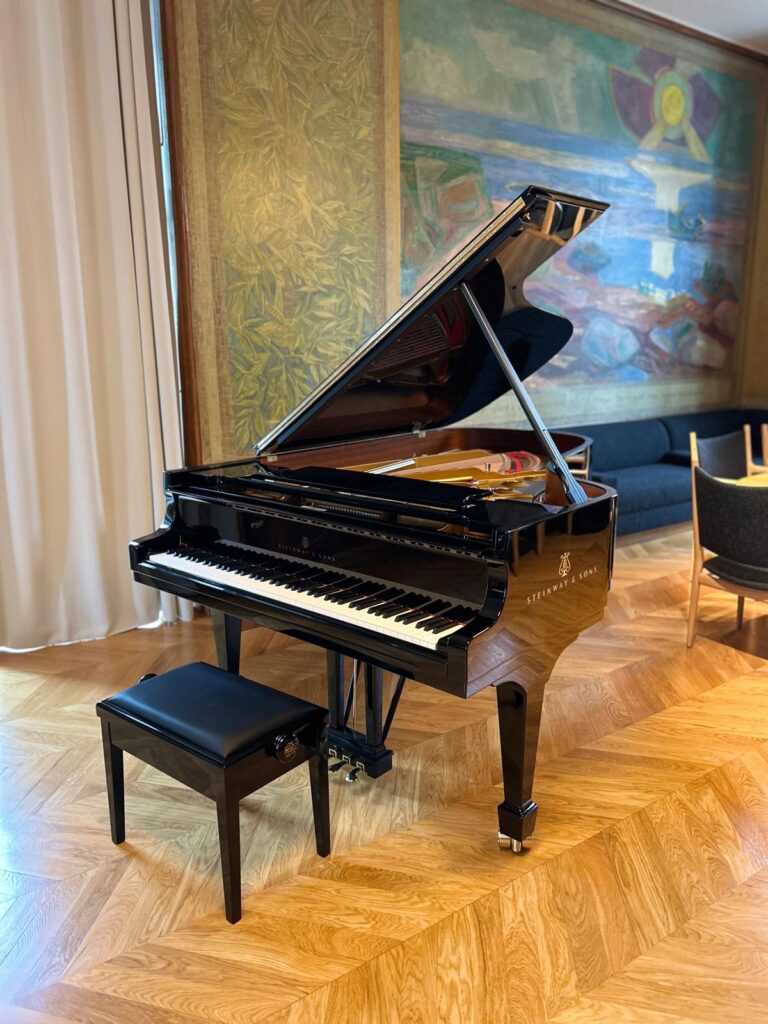
The restoration of the “salon” marked a major milestone in the preservation and enhancement of one of the House’s most iconic spaces. Led by architect Rémy Tilak, this ambitious project was carried out with the utmost respect for the vision of Kaj Gottlob, the House’s architect.
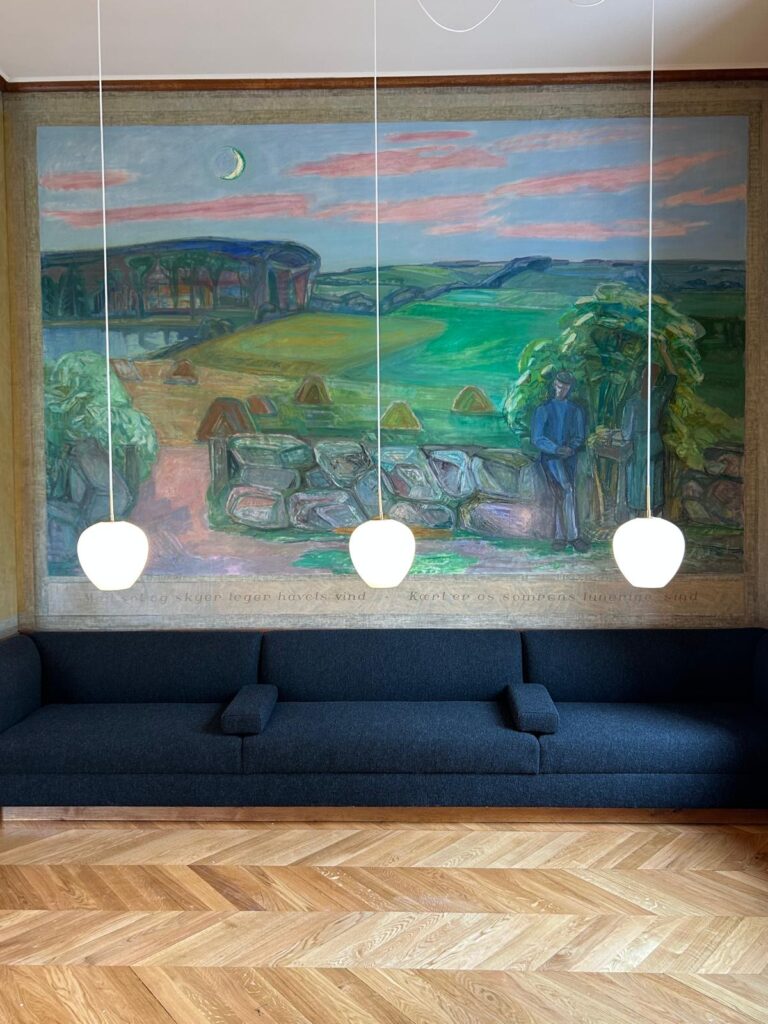
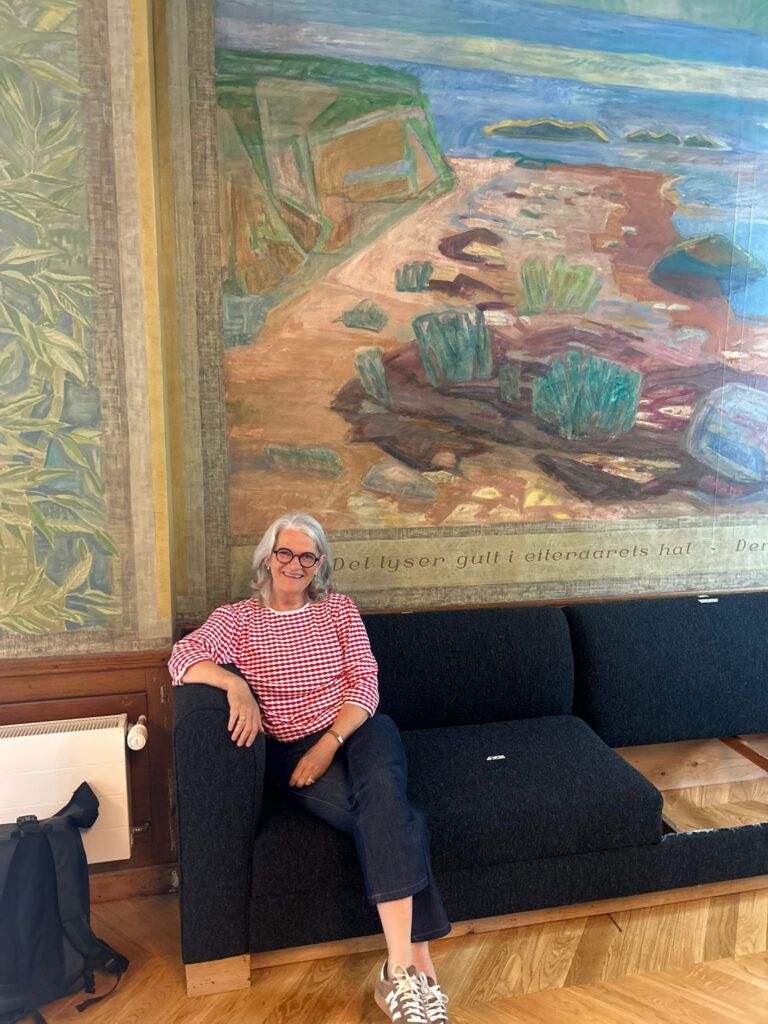
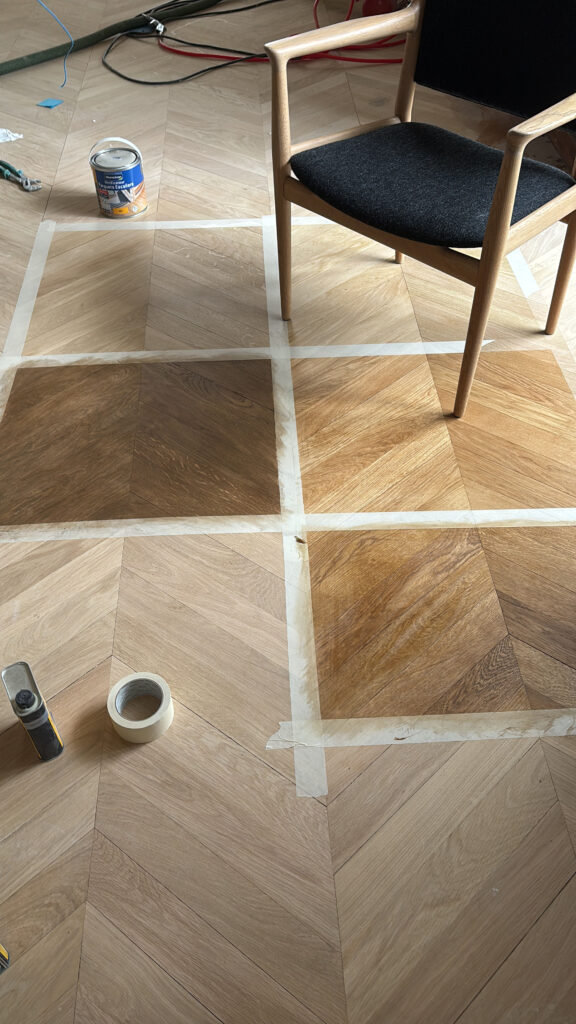
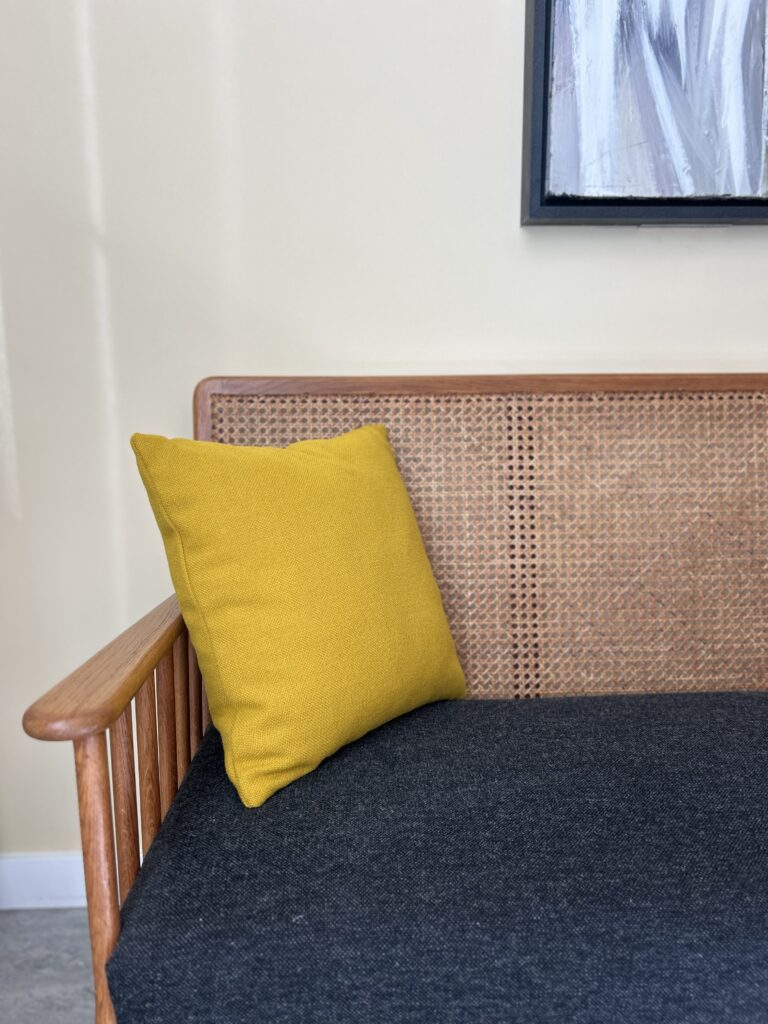
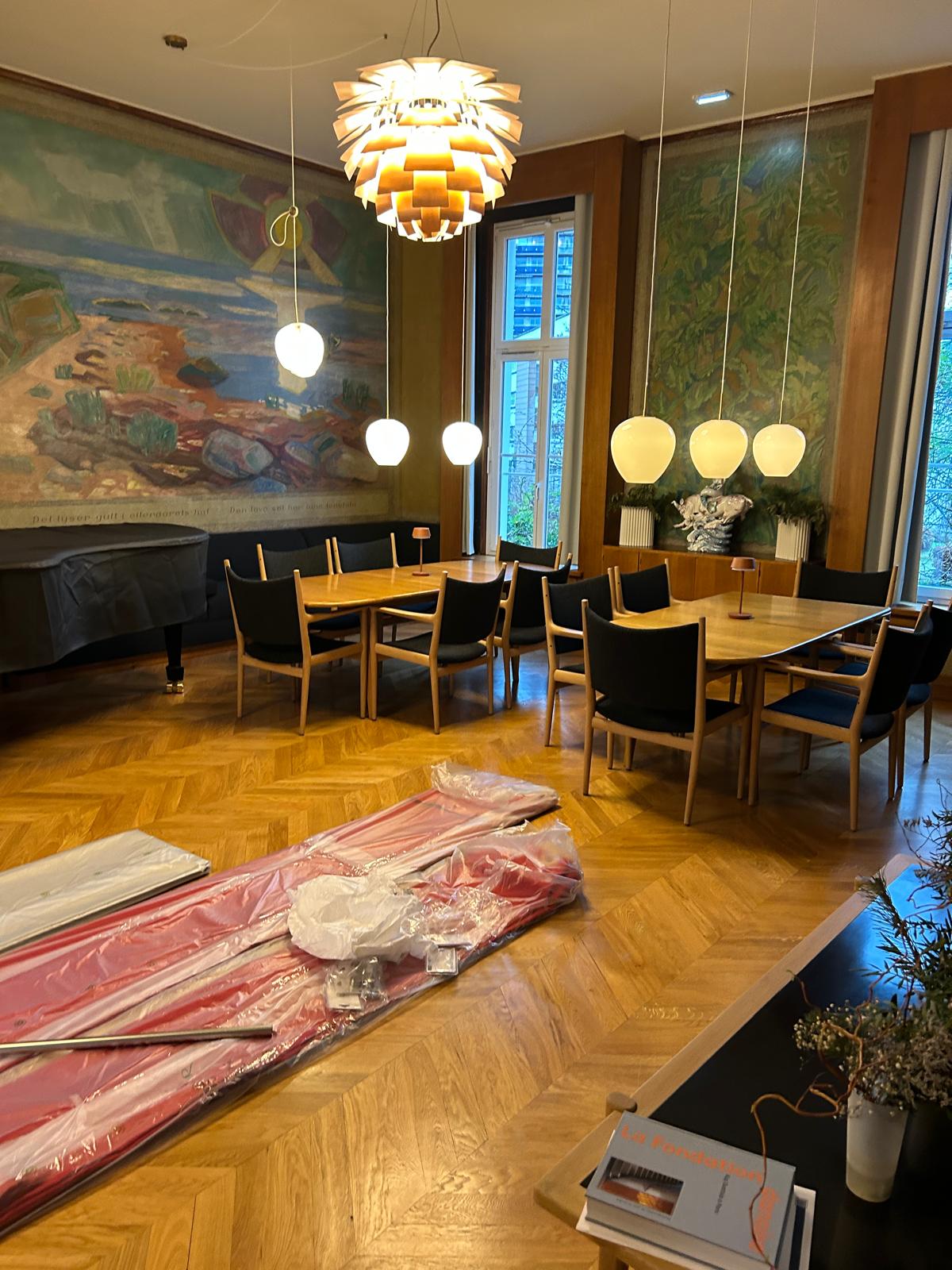
The work focused on restoring the ceilings, the hardwood floors, and the original furniture—particularly the coffee tables, armchairs, and sofas that define this living and gathering space. The upholstery was restored by the Coulon workshops, which reupholstered the armchairs and sofas in Kvadrat’s Hallingdal fabric in black, in accordance with the wishes expressed by Kaj Gottlob in his original drawings and descriptions. The curtains were also completely replaced by the Coulon workshops using a red fabric from Kvadrat, thus reconnecting with the color palette envisioned by the architect.
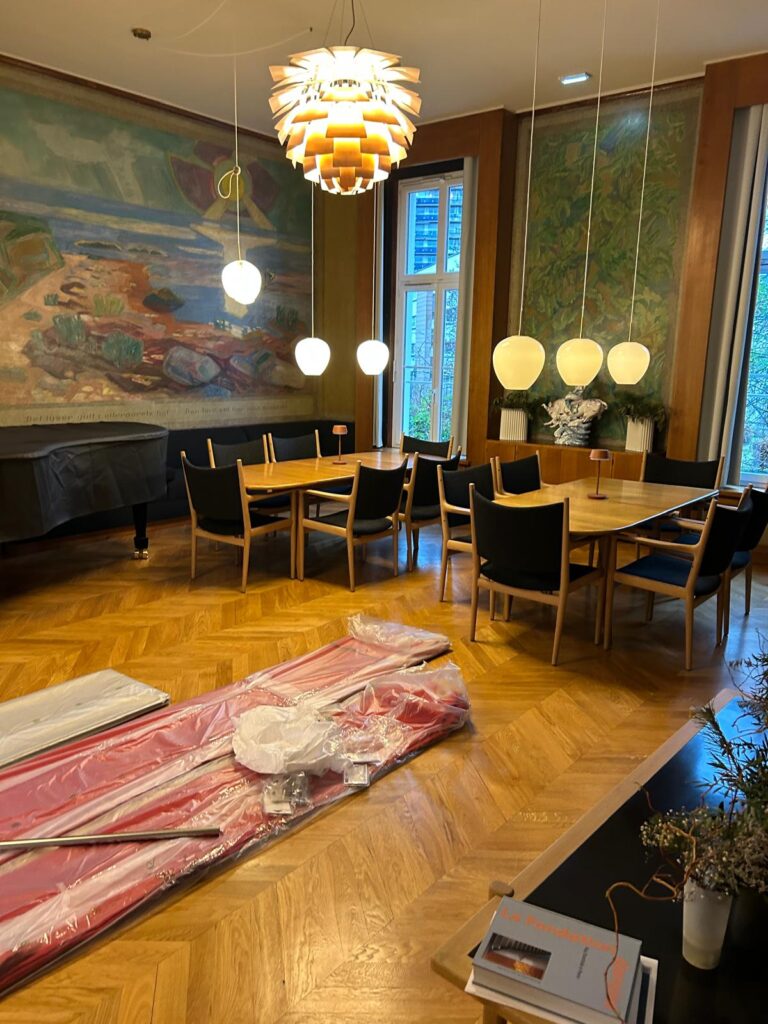
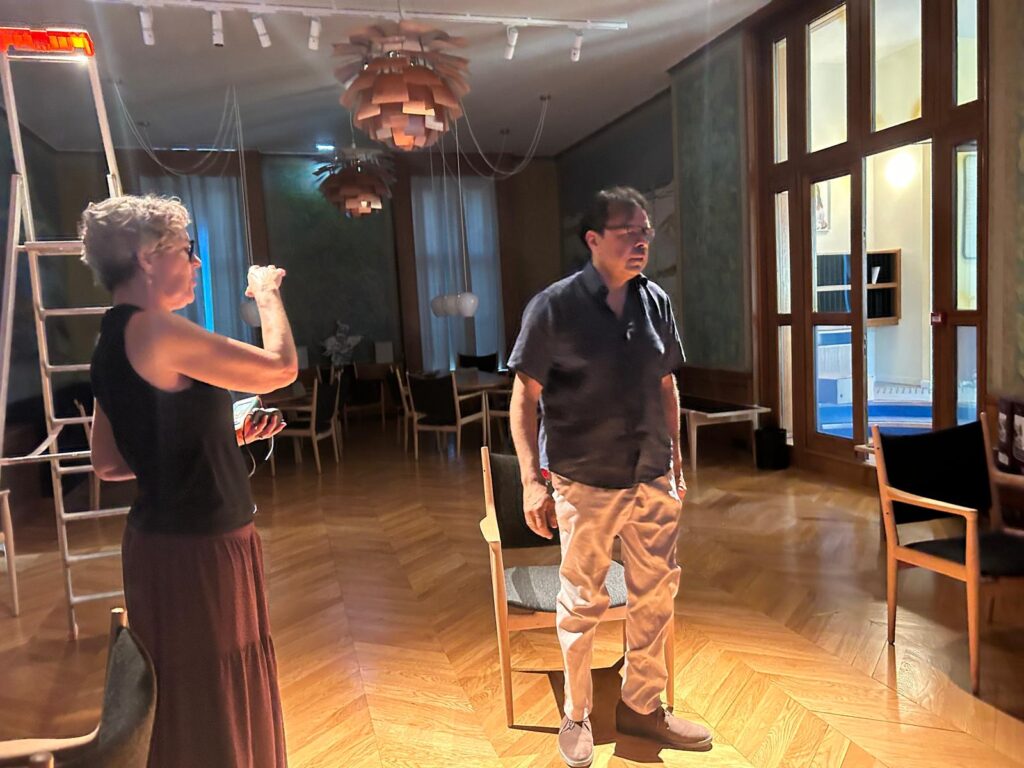
Particular attention was paid to lighting, an essential element of the House’s warm atmosphere. The design of the new lighting was entrusted to Danish lighting architect Marianne Tuxen, who conceived a system that is both discreet and contemporary. The selected “tulip” light fixtures pay homage to the legacy of Danish design and echo the famous PH Artichoke pendant lamp, created in 1958 by Poul Henningsen, one of the icons of Scandinavian design. The entire lighting system is programmable and controllable via iPad, allowing the lounge’s atmosphere to be adapted to the various uses and events held throughout the year.
The project also incorporated new amenities designed to enhance residents’ comfort and improve the venue’s ability to host cultural events. A projection screen was installed, along with a custom-built cabinet designed to house the video projector and its technical equipment. This setup allows the venue to host conferences, screenings, presentations, and other cultural events under optimal conditions.
Thanks to this extensive restoration, the lounge has now regained its architectural coherence and original elegance, while meeting the contemporary needs of the residents and the Danish Student House’s cultural programming.